
What the Hell Happened to Veganism?
Plant-based sales decreasing, vegan restaurants closing, people stopping being vegan and sometimes even starting to eat only meat. Things seem different now than they did back in late 2018, when The Economist predicted that 2019 was going to be the ‘Year of the Vegan’. So, what the hell happened to veganism?
Transcript and sources for video released 21/09/2026:
One of the main challenges with this topic is accounting for the situation in different countries. So, for the purposes of this video, I’m going to focus on the UK. With this in mind, let’s talk about pubs.
Pubs have been struggling in the UK in recent years, but is this because the UK doesn’t like pubs anymore? Well, no, it’s because of rising living costs, meaning that people have less money to spend, combined with the rising costs associated with running hospitality businesses.
But what’s this got to do with vegan restaurants? Well, the issues affecting pubs affect other businesses too, including vegan restaurants. But when pubs close it's viewed as being a consequence of the current economic climate and a failure from the government to support businesses, when vegan restaurants close, it’s because of veganism.
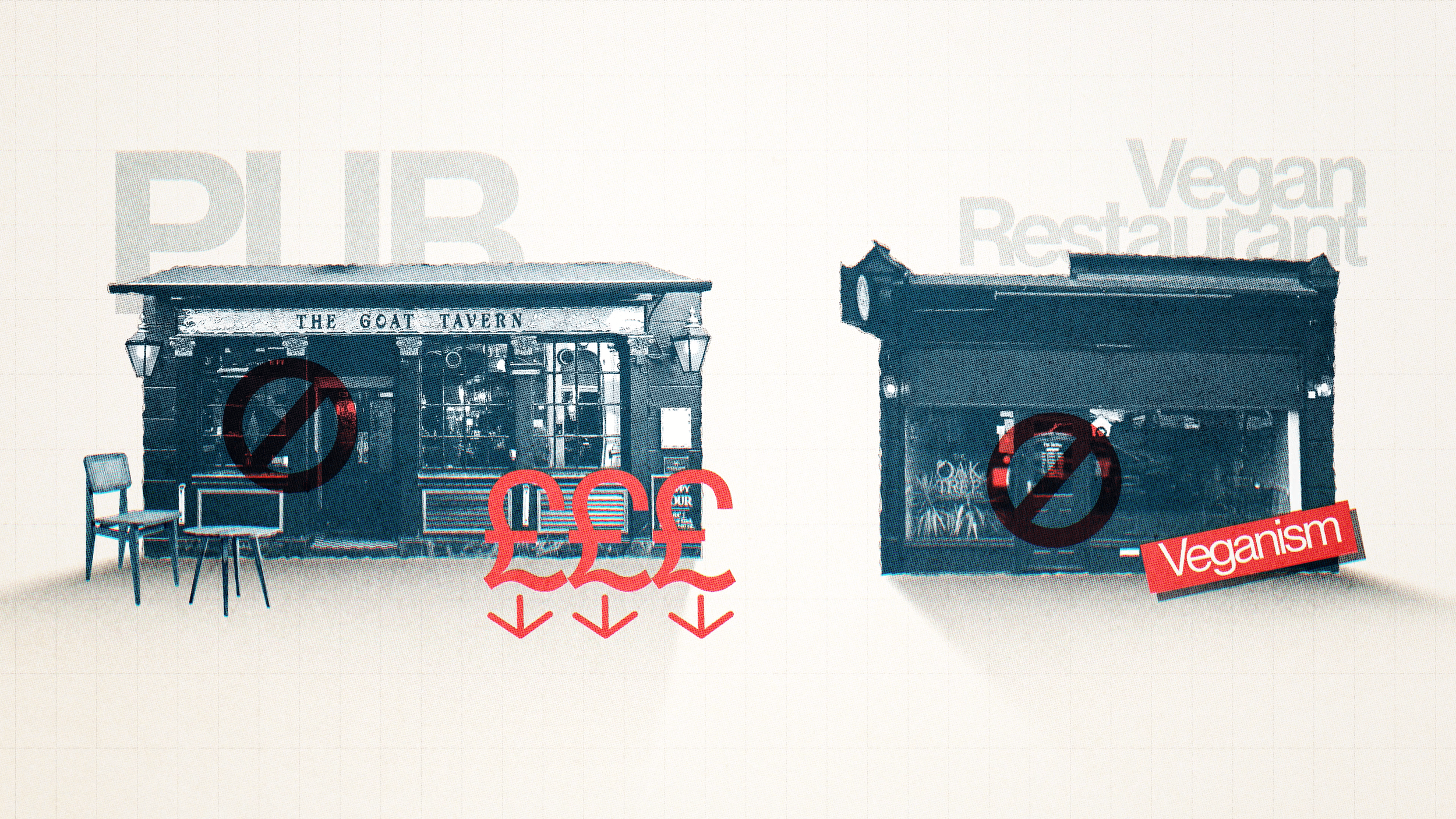
Although, this isn’t the full story. Non-vegan restaurants have also been reducing the number of vegan and vegetarian options they offer, with many establishments starting to prioritise higher-margin dishes using chicken.
Kara Buffrey, the founding partner of restaurant agency Chomp, believes that: ‘The scaling back of veggie options… feels more like a market correction than a cultural reversal..Veganism arguably went through a hype phase and brands were bold in responding to that momentum. But fast food operates on very tight margins and is entirely demand-led. If people aren’t ordering veggie takeaways in high enough numbers, those products won’t survive.’
‘I don’t think vegetarianism itself is necessarily declining, rather, with eating out becoming more expensive, consumers may feel they get more value from meat options. This looks like brands responding pragmatically to purchasing behaviour rather than making a broader ideological shift.’
Restaurants also don’t need lots of vegan options to cater to vegans. The previous five years or so have created ample opportunities for businesses to see which their most popular vegan dishes are, so removing the less popular dishes to prioritise the ones that the majority of customers ordering a plant-based option are opting for anyway makes financial sense. Although, replacing those dishes with meat-based options, particularly chicken, does reflect the recent rise in chicken consumption in the UK and the fact that the growth in demand for plant-based options isn’t as high as it was at the start of the decade.
But what about plant-based products in supermarkets?
Arguably the biggest stick that’s been used to beat veganism in recent years is the decline in sales of alternative proteins, which is something that has also been seen in the UK too. So, why is this?
Well, just as the current economic environment has impacted brick and mortar establishments, it also affects food companies too. Alternative proteins can be more expensive, especially as supermarkets often add higher profit margins to plant-based alternatives, which will understandably impact sales during times of economic uncertainty and challenges – this again ties in with the rise in chicken consumption, often a cheaper meat.
One of the biggest conversations affecting plant-based food products is around ultra-processed foods. While this conversation has clear merits – after all, doughnuts, cakes, sweets, and the list goes on, are not good for us – it is also a conversation that has been used to unfairly attack plant-based alternatives. A multinational study of over a quarter of a million people found that while higher consumption of UPFs was associated with an increased risk of cancer and cardiometabolic diseases, plant-based alternatives were not associated with an increased risk.
While many sections of the media have been quick to attack processed meat alternatives, they have remained oddly quiet about meat. This has led to a survey in the UK showing that meat alternatives are the second food group that people most commonly associate with ultra-processed foods. More people associated meat alternatives with being ultra-processed than the processed meat products they are replicating.
There is also a simple truth, many alternative products are not good; in fact, some have been terrible. The same is true of plant-based options in restaurants, many of which were poor. There was a huge surge in plant-based options, resulting in more options than there probably was demand for, with some of those options being very poor. Lots of businesses wanted to get into the plant-based space, but not all were going to succeed. The plant-based sector arguably needed to go through a period of consolidation, it’s what comes out of that period that will most likely determine the future of the plant-based food sector.
Plus, while all of these factors might have led to people purchasing fewer alternatives than they were previously, that doesn’t mean that all those people are now turning to meat. Sales of plant proteins such as tofu and tempeh have been increasing year on year, reflecting the desire for whole-foods plant proteins and a growing focus in the UK around fibre and the 30 plants a week goal. The UK’s largest supermarket Tesco also announced in early 2026 that they had seen a return to growth in the plant-based sector as a whole, stating that: ‘We are beginning to see the green shoots of recovery across the UK’s plant-based food sector.’
But this really leads me to what is arguably the most important question of all, has the number of vegans been in decline?
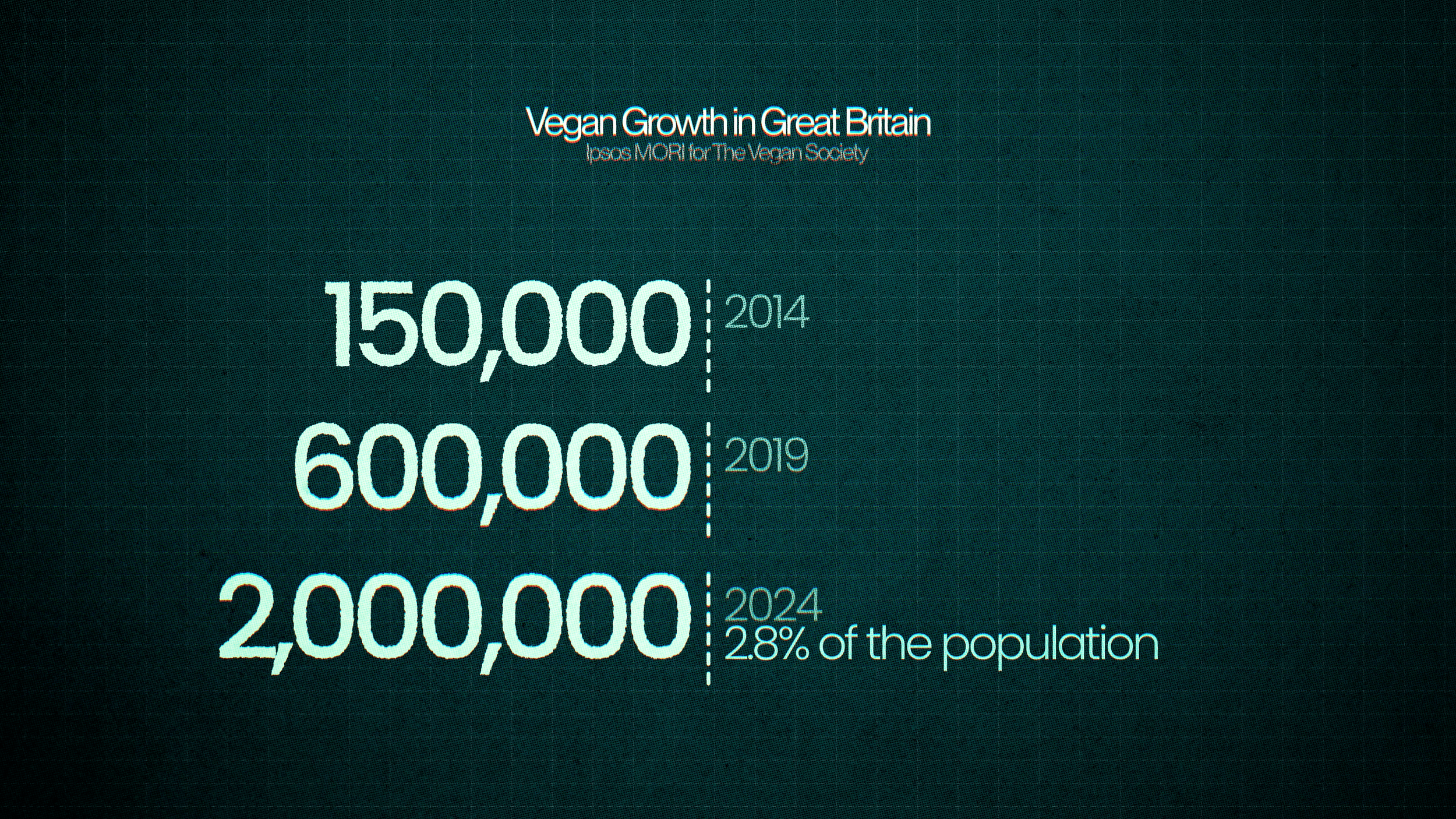
If we look at research carried out by Ipsos, the number of vegans rose from 150,000 in 2014 to 600,000 by 2019. By the end of 2024, the number of people who said they were vegan or plant-based was 2 million, or about 2.8% of the UK population. This figure is backed up by a YouGov poll, which showed that by the end of 2025 3% of Britons were vegan, and a Finder poll, which showed that by the end of 2025 3.1% of Britons were vegan.
Based on these surveys, it seems that the number of vegans rose rapidly and has remained consistent in recent years.
In many ways, this might come as a surprise and might even be a positive reflection on veganism. Not only has there been a huge amount of negative attention directed towards veganism both online and in mainstream media, but attitudes towards other social issues have been dented in recent years.
Again, looking at research carried out by Ipsos, this time for Kings College and about attitudes towards climate change, the number of people in the UK who said they were at least fairly worried about climate change dropped by over 10% between 2021 and 2025. During the same time, the number of people who said that they are not at all worried about climate change has more than doubled.
The culture war has dragged anything that is considered woke or lefty into it, and while the UK isn’t as bad as places like the US when it comes to some of these issues, it is also far from immune to increasing polarisation and the rise of right wing populism. With this in mind, the fact that the number of people who are vegan appears to have remained stable is notable, although a 10% fluctuation is arguably harder to pick up when it comes to 3% of the population compared to 80%.
So, is veganism in decline? Well, the truth is, it’s complicated. The answer is probably yes and no. Yes, if you view it from the perspective of has it managed to maintain the same level of interest and growth that it had before the pandemic, and no, if you view it from the perspective of has it remained stable.
So, I could have made a video telling you all the reasons why veganism is over, done for, finished. I could also make a video telling you that veganism is doing better than ever. Less sensationally, the truth is actually somewhere in the middle.
- Ed Winters